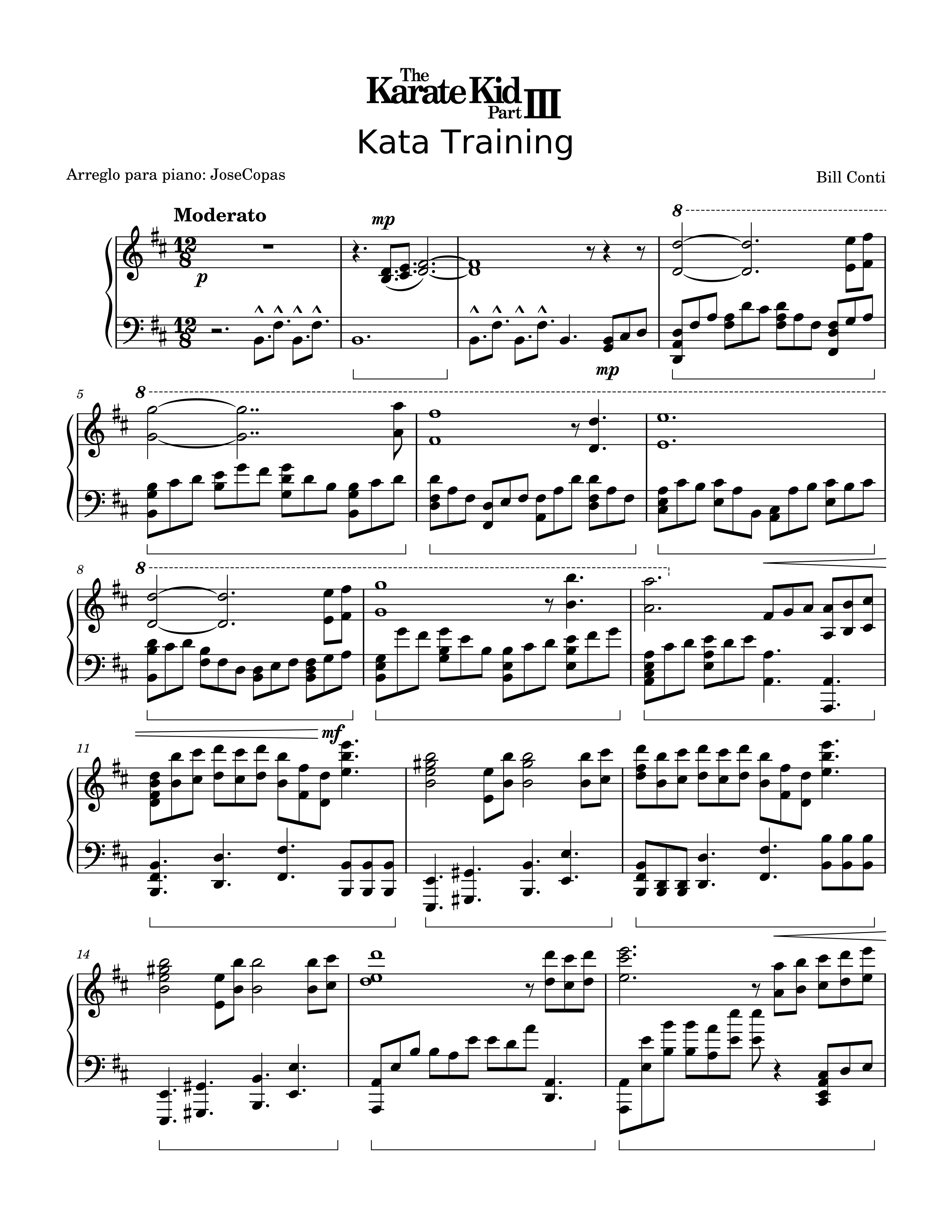
Music has always walked beside the martial arts—even when we don’t consciously notice it. From the deep boom of temple drums to the quiet rhythm of breath in a solo form, sound and movement have been intertwined for centuries. In modern training halls, playlists may replace drums, but the effect remains the same: music shapes timing, sharpens focus, regulates emotion, and strengthens the connection between mind and body.
Far from being a distraction, music can become a powerful training ally. When used with intention, it enhances technical skill, improves conditioning, deepens internal awareness, and reinforces the very spirit that martial arts are meant to cultivate.
This article explores why music works, how it affects the body and brain, and how martial artists of all styles can use music to train smarter, not just harder.
Rhythm: The Backbone of Movement
Every martial art is built on rhythm.
Punch combinations, footwork patterns, kata, forms, weapon sets, and even sparring exchanges follow rhythmic structures. Music strengthens a practitioner’s internal sense of timing, allowing techniques to flow rather than feel forced.
Training to music helps students:
-
Maintain consistent pacing during drills
-
Transition smoothly between techniques
-
Avoid rushing or hesitating under pressure
A steady beat anchors movement. Faster tempos energize combinations and conditioning drills, while slower rhythms support balance, rooting, and precision. Over time, practitioners internalize rhythm, allowing them to move efficiently even in silence.
This is especially valuable for beginners, who often struggle with timing. Music gives them a guide—something to move with rather than against.
Focus and Mental State: Training the Mind Through Sound
One of music’s greatest benefits is its effect on mental focus.
Martial arts demand presence. Music helps block external distractions, drawing attention inward and keeping the practitioner engaged with the task at hand. This is particularly helpful during repetitive drills, long-form practice, or endurance training, where mental fatigue often precedes physical fatigue.
Different styles of music produce different mental states:
-
Percussive or driving music enhances alertness and intensity
-
Ambient or instrumental music supports calm awareness and precision
-
Traditional or cultural music strengthens the connection to lineage and intent
Music also helps regulate emotional energy. It can reduce anxiety before sparring, steady nerves during testing, and elevate confidence during solo training. In this way, music becomes a tool for emotional self-regulation—one of the core benefits of martial arts training itself.
Breath, Movement, and Internal Arts
In internal systems such as Tai Chi, Qigong, and meditative martial practices, music plays a subtler but equally powerful role.
Slow, flowing music encourages:
-
Deeper, more consistent breathing
-
Smoother transitions between postures
-
Heightened awareness of alignment and relaxation
Music provides a tempo for the breath, helping practitioners synchronize inhalation and exhalation with movement. This reinforces efficient oxygen use, reduces unnecessary tension, and deepens the mind-body connection.
Even in external systems, breath control improves dramatically when movement is practiced with musical pacing. Students learn to strike on exhale, recover on inhale, and conserve energy through rhythm rather than force.
Conditioning and Endurance: Training Longer, Stronger, Smarter
Anyone who has pushed through a tough conditioning session with the right music knows its power.
Music increases endurance by:
-
Reducing perceived exertion
-
Improving motivation during fatigue
-
Encouraging consistent output over time
A well-chosen playlist can transform repetitive drills—shadowboxing, bag work, stance training, or weapon repetitions—into engaging, almost meditative sessions. Music provides structure to time-based training, allowing practitioners to push harder without constantly watching the clock.
This is especially effective in solo training, where motivation can waver. Music becomes a training partner, setting the tone and keeping momentum alive.

Memory, Learning, and Skill Retention
Music enhances learning by strengthening memory.
The brain naturally associates movement with sound. When a form, combination, or drill is practiced repeatedly with the same music, the sound becomes a cue. Hearing that music later can instantly trigger recall of the sequence, timing, and intent of the movements.
This is why many practitioners find they remember:
-
Forms more clearly when trained with music
-
Combinations more fluidly when rhythm is involved
-
Complex sequences with fewer errors
Music turns abstract instruction into embodied memory. It’s not just remembered—it’s felt.
This effect is particularly helpful for children and newer students, who benefit from multisensory learning. Sound reinforces sight and movement, accelerating skill acquisition.
Cultural Roots: Music as Martial Heritage
Historically, martial arts were rarely practiced in silence.
-
Chinese martial traditions used drums, gongs, and flutes
-
Okinawan and Japanese arts were influenced by ceremonial rhythm
-
Filipino systems integrated rhythm into weapon flow
-
Southeast Asian arts often trained alongside music and dance
Music preserved timing, taught structure, and transmitted cultural identity. Even today, traditional music helps modern practitioners connect to the roots of their art.
For many, training with traditional music fosters respect for lineage and history—reminding students that they are part of something larger than themselves.
Great martial artists understood this connection. Figures like Bruce Lee spoke often about rhythm, flow, and expression, while traditional masters such as Miyamoto Musashi emphasized harmony between mind, body, and timing—principles deeply aligned with musical training.
Expression and Personal Style
Martial arts are not mechanical—they are expressive.
Music encourages practitioners to find their own rhythm and personality within the art. When movement aligns with sound, techniques become more than drills; they become expression.
This is especially valuable in:
-
Forms and kata performance
-
Demonstrations and creative sequences
-
Flow drills and freestyle movement
Music invites practitioners to move through techniques rather than simply execute them. Over time, this develops confidence, presence, and individuality—qualities that define advanced martial artists.
Many legendary performers, including Ip Man, were known for calm rhythm and effortless flow—qualities that music naturally reinforces.
Teaching Benefits: Music in the Dojo
For instructors, music is a powerful teaching aid.
Used thoughtfully, it can:
-
Set class energy levels
-
Improve student engagement
-
Help manage large groups
-
Support age-appropriate learning
Children respond especially well to rhythm. Music helps them stay focused, follow structure, and enjoy repetition without boredom. Adults benefit from music that reduces stress and enhances immersion.
Music also creates emotional memory. Students often remember not just what they learned, but how training felt. That positive association keeps them coming back.


Choosing the Right Music
Not all music suits all training.
Effective use depends on intention:
-
Fast tempo for conditioning, combinations, and pad work
-
Moderate tempo for forms, basics, and technical refinement
-
Slow or ambient music for internal arts, stretching, and cooldown
Lyrics may motivate some students but distract others. Instrumental tracks often work best for technical training, while lyrical music can boost intensity during conditioning.
The key is purpose. Music should support training goals, not overpower them.
Silence Still Matters
It’s important to note: music is a tool, not a replacement for traditional training.
Silence remains essential for:
-
Sparring awareness
-
Breath sensitivity
-
Listening to instructors
-
Developing internal rhythm
The most skilled martial artists can move rhythmically with or without music. Training both ways creates balance—external guidance paired with internal mastery.
Conclusion: Sound as a Path to Mastery
Music enhances martial arts training because it speaks directly to the nervous system, the emotions, and the spirit. It sharpens timing, deepens focus, builds endurance, and strengthens memory. It connects modern practitioners to ancient traditions while allowing personal expression to emerge.
When used with intention, music does not distract from discipline—it refines it.
Martial arts teach us control, awareness, and harmony. Music reinforces those lessons, reminding us that true power is not just in force or speed, but in rhythm, balance, and flow.
Train with silence. Train with sound. Learn to hear the rhythm within your own movement—and let it guide you toward mastery.
https://www.patreon.com/c/u62114827

"One of the greatest things in the martial arts is the transmission of knowledge to the next generation." - Tashi Mark Warner
- Guan Yu’s Dragon Blade: Legend, History, and Martial Meaning - February 23, 2026
- The Chinese Broadsword (Dao): History, Form, and Fighting Spirit - February 19, 2026
- Harimau Silat’s Ground Game: The Missing Link in American Martial Arts - February 15, 2026
Leave a Reply