The Chinese broadsword—most commonly called the dao—is one of the most iconic weapons in Chinese martial culture. Instantly recognizable by its single-edged blade and forward-weighted profile, the dao has long been known as “the general of weapons,” prized for its power, adaptability, and battlefield practicality. From ancient warfare to modern kung fu forms, the broadsword embodies the balance between raw force and refined skill.
Origins and Historical Evolution
Single-edged blades appeared in China as early as the Shang and Zhou periods, but the dao truly came into prominence during the Han dynasty (206 BCE–220 CE). As cavalry warfare expanded, soldiers favored a weapon that could deliver decisive cuts from horseback. The dao’s sturdy spine and sharp edge made it ideal for slashing, chopping, and powerful follow-through strikes—advantages over the double-edged jian in mass combat.
Through the Tang and Song dynasties, the dao diversified. Infantry versions became broader and heavier, while cavalry blades lengthened and curved more dramatically. By the Ming dynasty, the dao was firmly entrenched as a military standard. Manuals by generals such as Qi Jiguang documented broadsword techniques and training drills, ensuring the weapon’s methods were preserved and systematized. During the Qing dynasty, regional variations flourished, giving rise to forms like the liuyedao (willow-leaf saber) and the heavier niuweidao (ox-tail saber).
Design and Characteristics
The defining feature of the Chinese broadsword is its single cutting edge paired with a thick spine, allowing the blade to withstand heavy impact. Most dao feature a slight curve, enhancing cutting efficiency, though straight versions exist. Guards are typically simple—often a disc or S-shaped crossguard—designed to protect the hand without impeding movement.
Handles are commonly wrapped for grip, sometimes ending in a pommel ring where tassels or cords may be attached. These cords are not merely decorative; they can distract an opponent’s vision, help secure the weapon, or assist in recovery during fast movements.
The Dao in Martial Arts
As warfare evolved and firearms reduced the role of bladed weapons, the dao transitioned from battlefield necessity to martial discipline. Within traditional kung fu systems, the broadsword became a foundational training weapon. Its weight and balance teach practitioners whole-body power, rooted stances, and fluid transitions between offense and defense.
In Shaolin traditions, the dao is trained with bold, committed movements—wide arcs, explosive steps, and strong intent. Practitioners learn to coordinate waist rotation, footwork, and breath to generate cutting force. Many forms emphasize continuous motion, teaching students to flow from block to strike without hesitation. This approach reflects the dao’s original purpose: to overwhelm an opponent through relentless pressure.
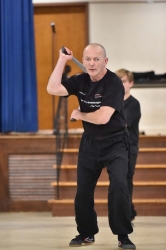
The broadsword is still taught and demonstrated at places such as the Shaolin Temple, where it remains a symbol of martial courage and disciplined practice.
Modern Practice and Legacy
Today, the Chinese broadsword is practiced worldwide in traditional schools, contemporary wushu, and cultural demonstrations. Modern performance dao are often lighter and more flexible, while traditional schools continue to train with heavier blades to preserve authentic mechanics.
Beyond technique, the dao carries philosophical weight. It rewards decisiveness, commitment, and courage. Unlike subtle, thrust-focused weapons, the broadsword demands that the practitioner step in, cut cleanly, and accept the consequences of action. For this reason, many instructors consider dao training essential for developing martial confidence and fighting spirit.
From ancient battlefields to modern training halls, the Chinese broadsword endures as a living link to China’s martial heritage—simple in design, formidable in application, and timeless in its lessons.


Leave a Reply